01
Product Strategy · UX/UI
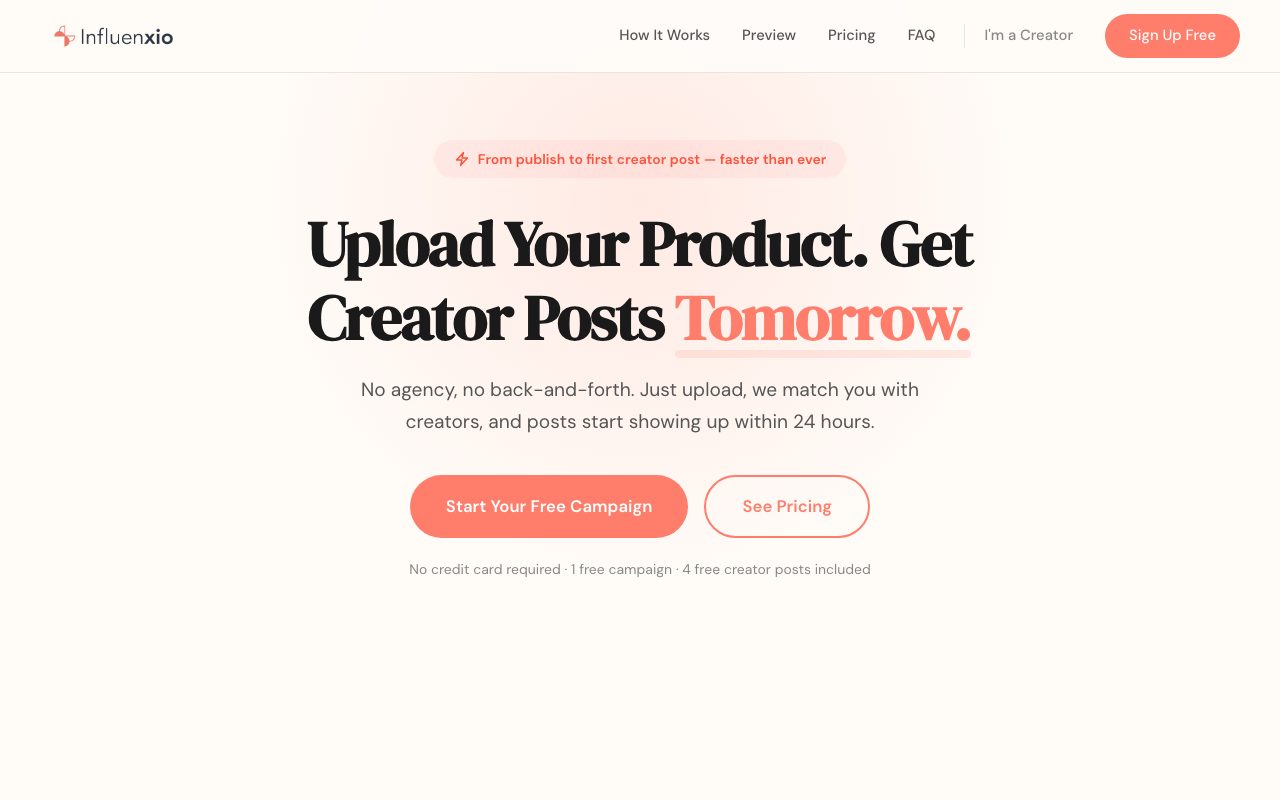
Influenxio
Leading product strategy and UX for an AI creator–brand platform — turning feature soup into clear priorities, a focused product direction, and usable end-to-end flows.
10+ years across product and marketing. I help founders clarify the problem, define the MVP, and improve the user experience.
Available for focused consultations and projects. Product strategy, discovery, and UX, with scope agreed up front.


Clarify who the product is for, what problem matters, and which assumptions to test before investing further.
Turn an early idea into a focused feature set, core user flows, and a product brief your team can work from.
Find friction in onboarding and key tasks, then prioritize the changes that make the experience clearer.

 Little Chapter
小小一頁 · for families who read together
A memory shelf for reading with your kids — save the thing they said after the story in thirty seconds.
Little Chapter
小小一頁 · for families who read together
A memory shelf for reading with your kids — save the thing they said after the story in thirty seconds.
 Reading Corner
閱讀一隅 · a reading corner of your own
A quiet place for the books you read for yourself — shelve them, log every read, keep your notes whole.
Reading Corner
閱讀一隅 · a reading corner of your own
A quiet place for the books you read for yourself — shelve them, log every read, keep your notes whole.
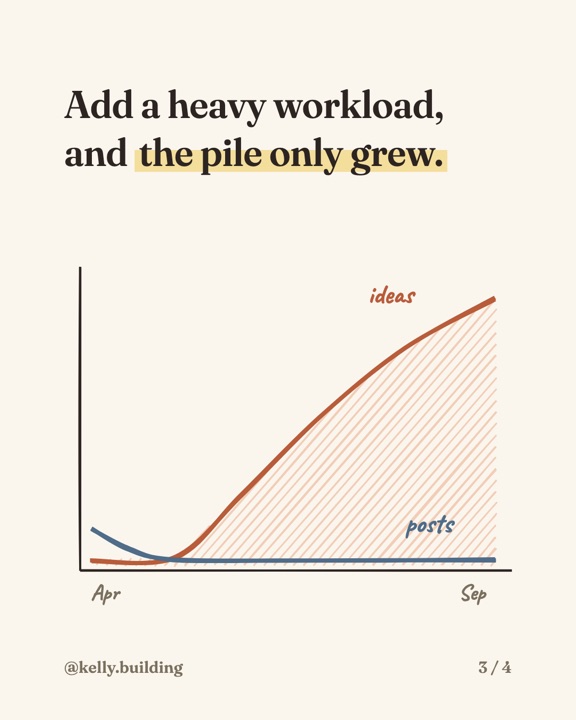
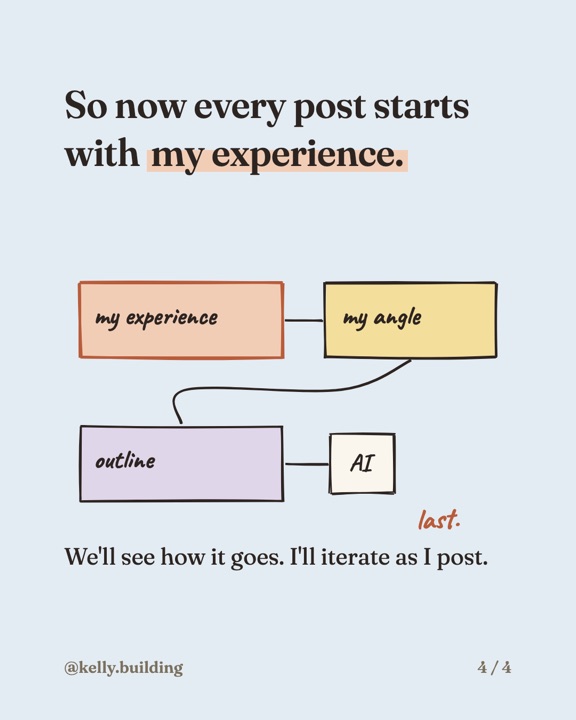
I've worked on more than fits here — these are the ones worth slowing down for. Digital and physical, founding to strategy. Same job throughout: figuring out what's worth building.
Product Strategy · UX/UI · 2025–now
Chineasy · Product Manager · 2019–2025
Brand & Operations
Founder · Solo Build Dots Global Academy · Full-stack Build
 Dots Global · Full-stack Build
Program Director · Youth Programs
Dots Global · Full-stack Build
Program Director · Youth ProgramsAn AI-driven platform connecting creators and brands. I lead product strategy and design — finding the focused product hiding inside an ambitious one.
Creator–brand collaboration is full of friction: discovery, briefs, negotiation, delivery. The temptation is to build for all of it at once — and end up with a platform that does ten things adequately and nothing memorably.
I worked with the founders and engineering to narrow the surface area: define the wedge, sequence the roadmap, and redesign the core collaboration flow so the AI does real work — matching, drafting, pricing — instead of decorating the UI.
Day to day that means owning specs, running the design, and keeping the team honest about what's actually for the user versus what's for the deck.
Live and iterating. The product has a clearer story, a tighter onboarding, and a roadmap the team can defend.
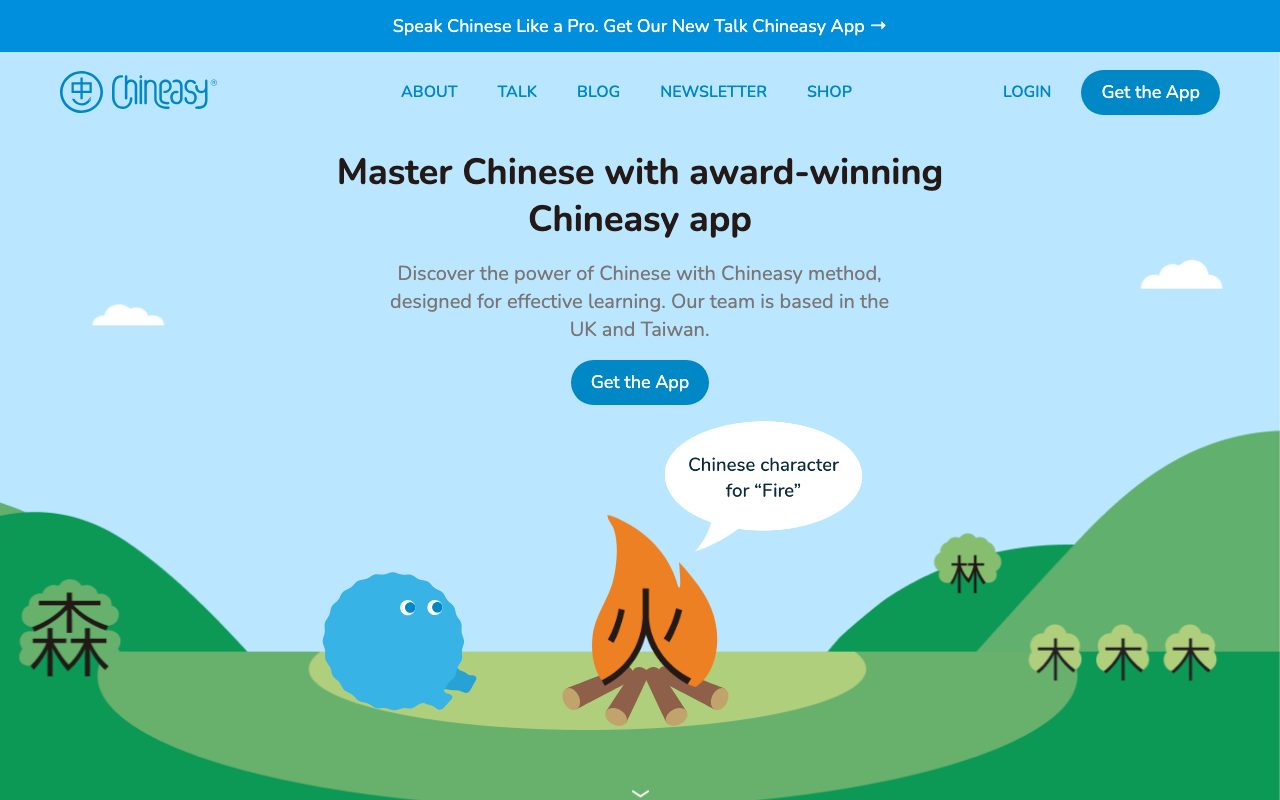
I led product at Chineasy — the award-winning platform that teaches Chinese through visual building blocks, used across 30+ countries in 19 languages.
I led product across everything Chineasy shipped — the app, a full website relaunch, even a board game — from planning and scope through testing, deployment, performance, and the day-to-day operations after launch.
The app was a 2022 Apple Design Awards finalist, reached No. 2 in the UK App Store (editor's choice) and No. 6 in the US education category. Beyond the app: a podcast featured by iTunes and Amazon Alexa, and a board game that won a Parents' Choice Award.
A corporate gifting brand celebrating working parents. I help bring it to life end to end — from positioning and marketing to printing, warehousing, and getting the boxes into customers' hands.
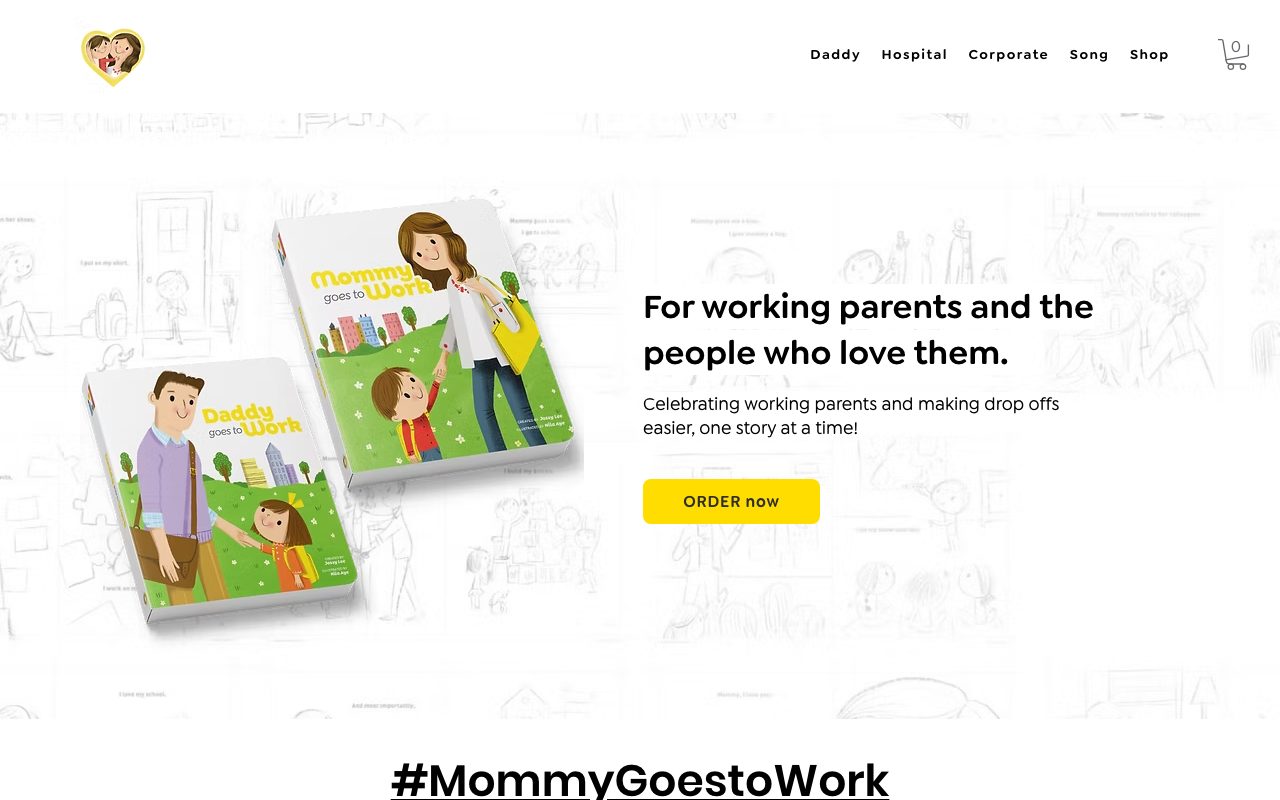
Companies want to support employees becoming parents but reach for generic gifts. The opportunity: a brand built around the real moments of becoming a working parent — and finding your feet again at work — that makes people feel seen.
Positioning and messaging, product curation, the brand voice, cold-outreach playbooks for US brands, and the unglamorous operations: orders, fulfillment, and the handoff to logistics partners.
On a team this small, there's no one to delegate the boring parts to — so the strategy has to survive contact with reality. It keeps me honest.
Growing its US client pipeline, with a repeatable outreach motion and a brand that holds together from first email to delivered gift.
An iOS/macOS app for task management and time tracking, built for makers who run on focus, not meetings. Designed and shipped by me.
I run several projects as an operator and a parent — time is the scarcest thing I have. Existing tools optimize for teams and tickets, not for one person trying to protect deep work. So I built the tool I needed.
Building it solo — design, SwiftUI, the data model, the visual system — is the most honest product education there is. Every shortcut I'd ever waved through as a PM, I now had to actually live with.
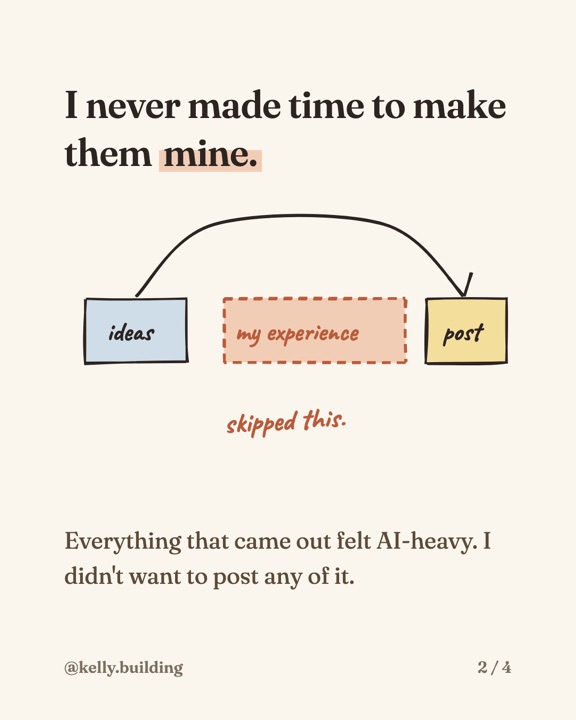
It's also where I practice building in public: shipping, writing about the decisions, and letting the work be the proof.
In active development — a Partner → Project → Task model, Workspace Focus, and a soft, rounded visual language that makes daily use feel calm rather than nagging.
The complete registration system for MIT Future Ready, a 5-day intensive camp taught by MIT instructors — designed and built by me, front to back.
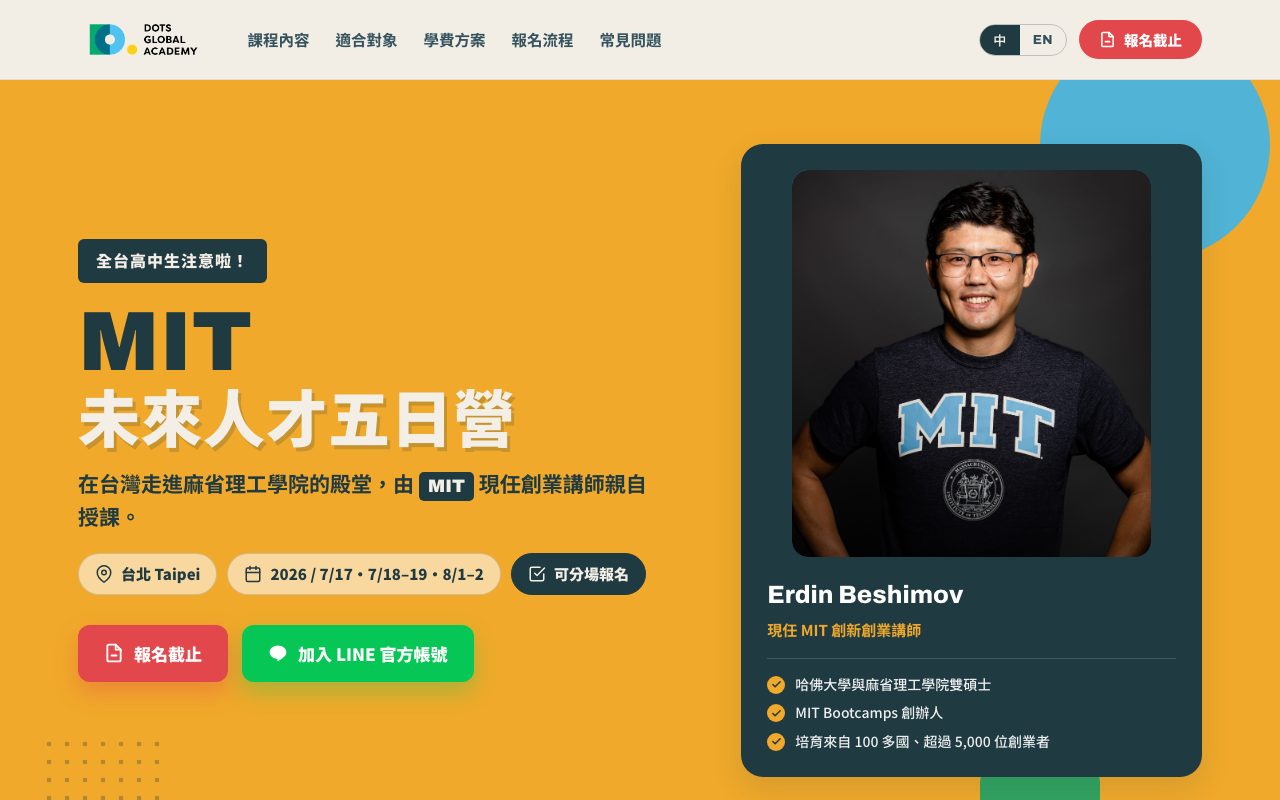
MIT Future Ready Camp came together on a compressed timeline: once the team committed to running the program, recruitment needed to begin almost immediately. There was no existing website, registration flow, or operational system to build from.
Rather than launching another standalone form, I created a dedicated subdomain and built the first version of the program website within the compressed timeline. The goal was not only to publish information quickly, but to establish one mechanism that could support every step that followed.
That first website grew into the operating system for the entire participant journey — from program information and registration to payment, automated communication, and, later, booking individual 1-on-1 sessions. The same underlying mechanism continues to support new needs without rebuilding the process each time.
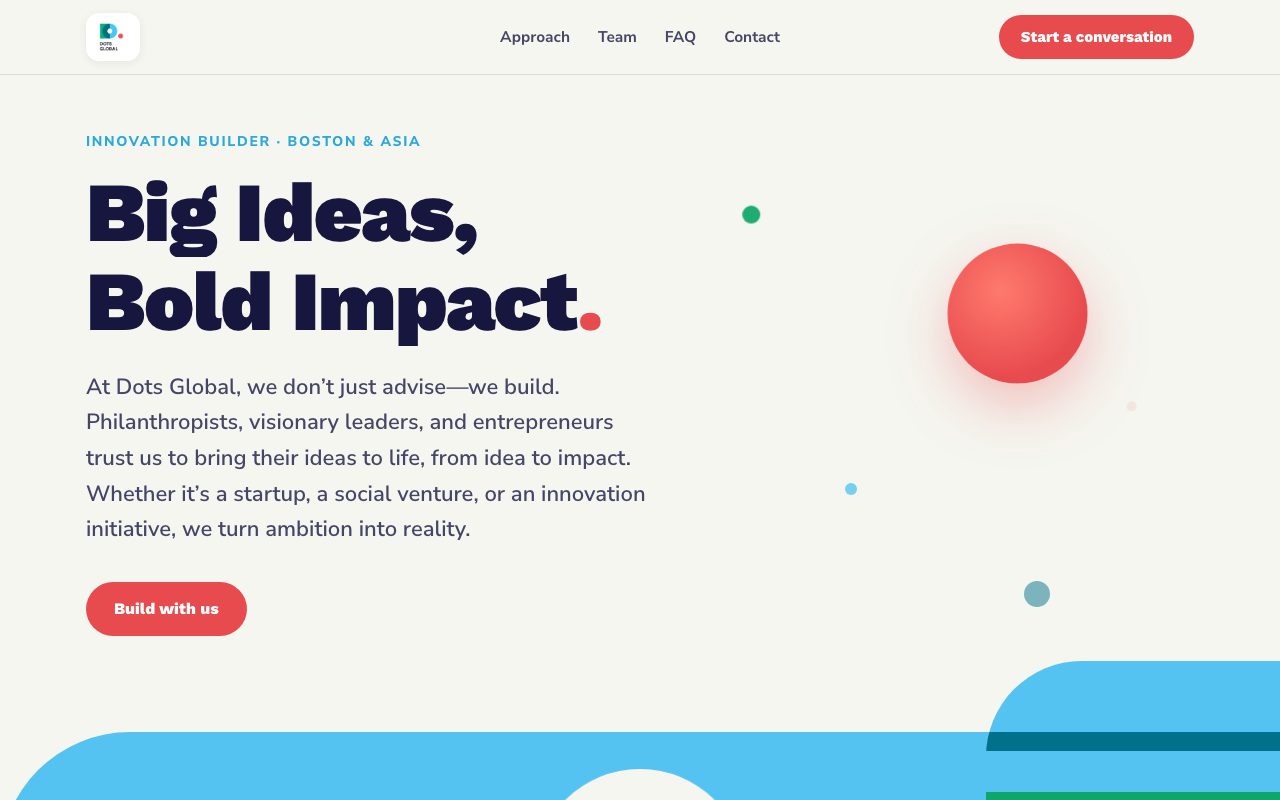
I run youth and education programs with Dots Global — summits, forums, camps, and capacity-building. They're ongoing by nature, so this is a living list. A few I've led:
A large-scale youth summit under Dots Global. I led the program coordination — aligning speakers, partners, and the team to put it on, on schedule.
Live site · InnoYouth SummitA capacity-building program won through a public tender — internal operations and project management across multiple stakeholders, keeping deliverables and deadlines on track.
See the YouthLab caseThis is the counterweight to the product work — proof that strategy without operations is just a nice document. New programs land here as they launch.
A youth capacity-building program in Taipei — Dots Global won the public tender, and I built the three surfaces it runs on: the public page, the participant area, and the staff console.
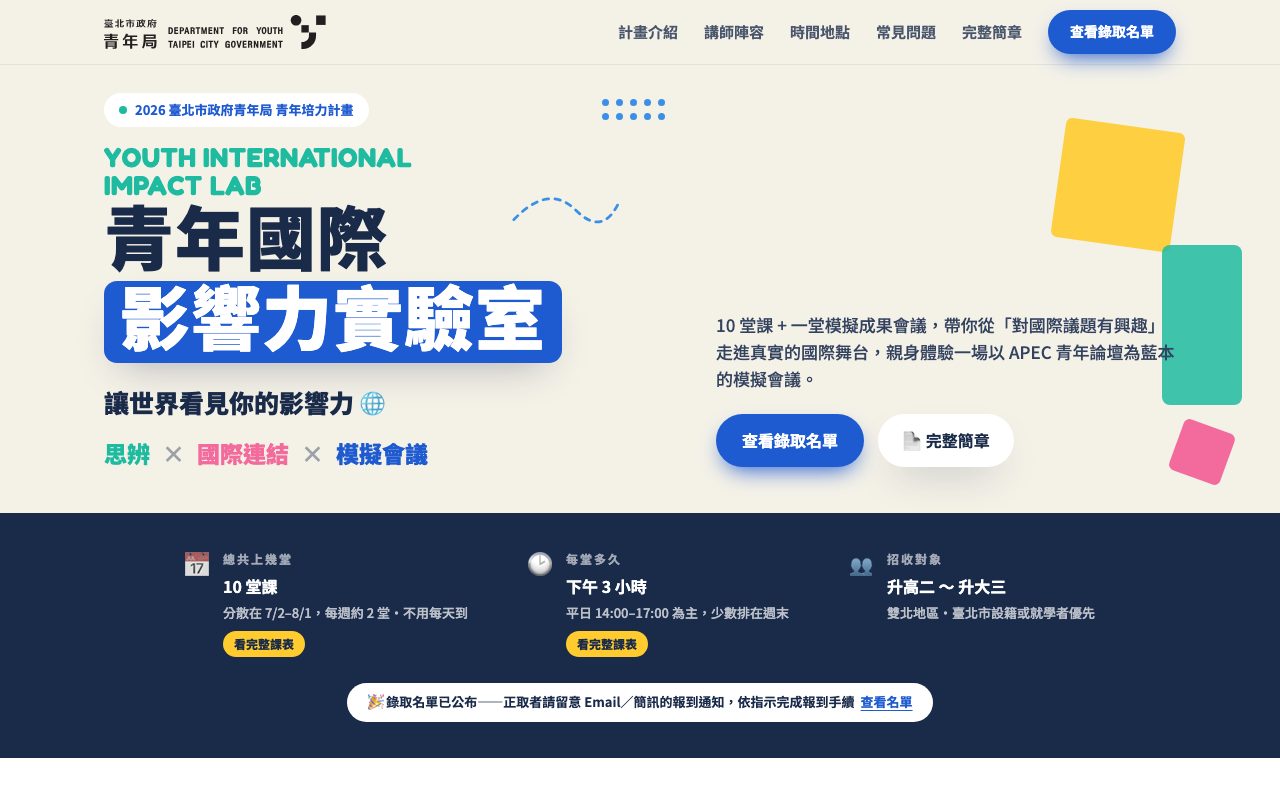
YouthLab originally relied on a Google Form for registration. It could collect the necessary information, but it gave participants very little help understanding the program as a whole — what they were joining, how it would work, and what would be expected of them.
We decided to build a dedicated landing page that could explain the program before asking anyone to apply. I structured the content around the participant journey, making the purpose, format, schedule, and next steps easier to understand in one place.
Three surfaces on one deploy: a public page for admissions and logistics; a participant area where students sign in with a personal code to check the schedule, request leave, book a make-up session, and fill in the pre- and post-class surveys; and a staff console behind a passcode for attendance, announcements, rescheduling, and collecting submissions.
A Cloudflare Worker sits in front of Notion as the datastore — roster, leave and make-ups, pre-class surveys, post-class feedback — with R2 holding the documents students upload to justify an absence. Keeping the records in Notion means the program team can read and correct them in a tool they already use, instead of waiting on me.
The website became the program's front door rather than another form link. Participants could make an informed decision before registering, and the same foundation later expanded to support participant actions and staff operations throughout the program.
Start with a product question or a specific flow that needs attention. We agree on the deliverables, timing, and fee before starting. I work remotely alongside your founders, designers, and engineers.
We review your product idea, existing research, and assumptions. Together, we clarify the target audience, positioning, and the questions that need customer evidence. For AI products, we examine where AI would solve a real user problem.
You getWe define the smallest useful first version, map the core user flows, and turn product decisions into a brief your team can act on. Open questions and tradeoffs stay visible so design and engineering can plan the work.
You getI walk through an agreed set of key tasks, review the context you already have, and identify points of confusion or friction. You get a prioritized set of improvements and a plan for checking them with users.
You getA consultation can stand on its own or lead into a defined project. For project work, the proposal sets out the deliverables, review points, and fee. We agree any scope changes together.
My role covers product direction, research planning, requirements, and UX recommendations. Your delivery team owns implementation; I provide the product context and clarify decisions with them.
We discuss the product, the decision you need to make, and what a useful outcome would look like.
We agree on the scope, fee, and schedule, including the input and review time needed from your team.
We review the findings and decisions together. You leave with clear recommendations and the files your team needs to move forward.
I bring 10+ years across marketing and product, from consumer learning apps to an AI creator–brand platform. I work with founders and teams on product direction, feature priorities, and the user experience.
I run my work under 155 Studio, where I build my own products too — so I'm never just theorizing about what makes building hard.
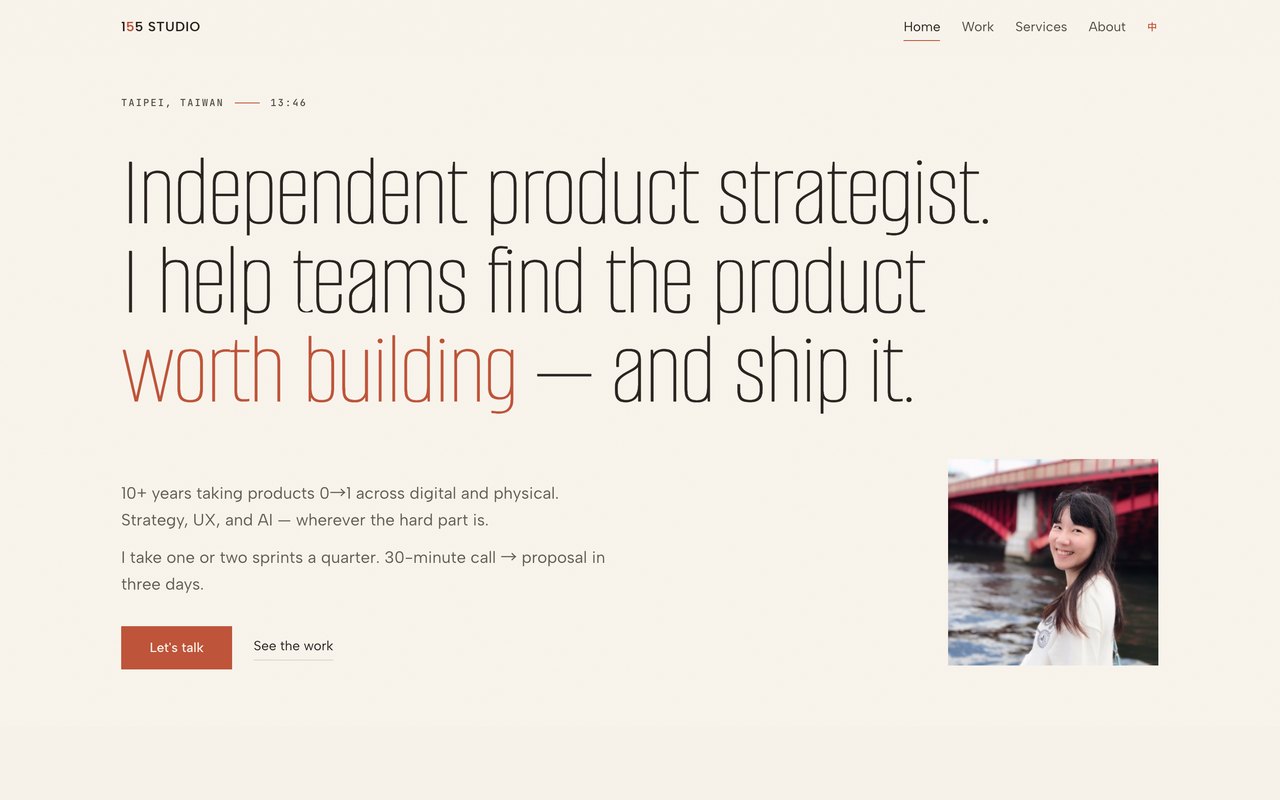
Most products don't fail from too few features — they fail from no point of view. My job is to find the one thing worth building, frame it sharply, and then do the unglamorous work of getting it into people's hands.
I'm equally comfortable in a strategy conversation and in the weeds of a spec or a fulfillment spreadsheet. The range is the point: strategy that never touches reality is just a nice document.
I'm a mom. Which means I have less time than almost anyone I work with — and that turned into my most useful product instinct: a low tolerance for motion that isn't progress. Constraints aren't a limitation here. They're how I stay sharp about what actually matters.
Product strategy and UX at Influenxio, brand and operations at Mommy Goes to Work, program delivery at Dots Global, and my own app at 155 Studio — documented in public as I go.
The best products usually start as a messy problem nobody's framed yet. If that's where you are, that's where I'm useful.
Tell me about your product, the decision or experience you want to improve, and your timeline. We can start with a focused conversation.
If it's a fit, I'll get back to you and we'll schedule a 30-minute call.